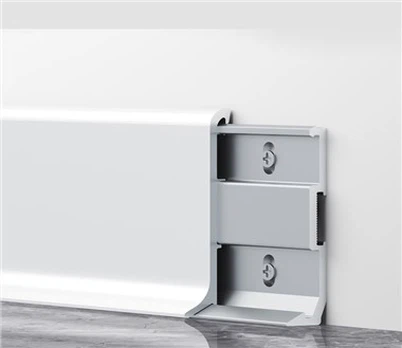
Sourcing Architectural Tile Trims In Malaysia: Premium Customization & Supply Chain Resilience
Leave a message

For large-scale building material wholesalers, regional distributors, and major commercial contractors in Southeast Asia, sourcing architectural finishing profiles is no longer just about finding the lowest price per unit. As structural requirements become more rigorous and trade environments grow increasingly volatile, institutional buyers face a complex trilemma: ensuring absolute regulatory compliance, securing massive and highly specific product catalogs, and mitigating geopolitical supply disruptions.
As industry professionals gather across major commercial exhibitions like ARCHIDEX in Kuala Lumpur and the Canton Fair in Guangzhou, the spotlight has shifted firmly onto vendor structural capabilities. This comprehensive technical guide dissects the critical benchmarks that B2B buyers must evaluate when selecting a long-term manufacturing partner for aluminum, brass, and stainless steel tile trims.
1. Deciphering Local Regulatory Standards: SIRIM and CIDB Compliance
The Malaysian construction sector operates under strict technical oversight. A recurring pitfall for international procurement managers is importing non-certified building components that fail onsite inspections, resulting in costly legal liabilities and project delays. When sourcing structural or finishing profiles, verification of local standards is non-negotiable.
- SIRIM Certification: Validates that aluminum extrusions conform to precise metallurgical compositions, mechanical strengths, and anodizing thicknesses. This ensures long-term structural integrity and resistance to oxidation in highly humid tropical environments.
- CIDB Frameworks: Alignment with Construction Industry Development Board guidelines guarantees that materials meet commercial grade ratings, safeguarding contractors during rigorous building audits.
Partnering directly with a certified manufacturer that provides transparent testing paperwork dramatically streamlines customs clearance and local project sign-offs.
2. Maximizing Profile Scale: The 10,000+ Mold Imperative
Commercial project blueprints demand extensive geometric diversity. A distributor relying on a manufacturer with limited tooling capabilities will inevitably suffer from fractured supply lines, forcing them to split orders among multiple sub-vendors. This dilutes bargaining power and creates chaotic variations in surface finishes.

An enterprise-grade manufacturing partner should possess a comprehensive mold portfolio exceeding 10,000+ distinct profiles. This massive structural capacity allows wholesalers to consolidate their sourcing for diverse architectural applications:
- Traditional L-shaped, U-shaped, and T-shaped transitions.
- Heavy-duty square-edge square profiles and sophisticated decorative listellos.
- Custom industrial expansion joints designed to withstand high-traffic dynamic loads.
Furthermore, technical buyers must scrutinize surface execution. Premium suppliers utilize advanced micro-extrusion lines capable of maintaining ultra-uniform wall thickness tolerances (within 0.05mm) across premium anodized, brushed, matt, and high-gloss chrome finishes.
3. Agile Branding: Full OEM/ODM Customization Capabilities
For regional building material hypermarkets and established market brands, packaging and branding are just as vital as physical product quality. A true B2B manufacturing partner does not merely ship generic commodities; they offer a fully integrated white-label or custom-branded ecosystem.
Advanced OEM/ODM capabilities encompass every stage of production:

- Custom Punching Holes: Precision engineering of distinct punch patterns (such as specialized logos, triangles, or standard round slots) to maximize adhesive bonding while displaying corporate identity.
- Protective Film Co-Branding: Extruding custom-printed protective films that feature the client's corporate logo and technical installation instructions directly on the profile surface.
- Retail-Ready Logistics: Tailoring individual barcodes, heavy-duty retail end-cap cartons, and pallet configurations optimized for rapid deployment to commercial distribution floors.
4. Supply Chain Security: Mitigating Risk via Multi-Origin Manufacturing
Global logistics bottlenecks, fluctuating freight tariffs, and regional political instability mean that relying on a single production facility presents an existential business risk. Institutional buyers are increasingly shifting toward resilient "China Plus Two" supply chains.

To guarantee uninterrupted product availability, leading international manufacturers establish redundant production networks across multiple distinct geographic zones, such as China, Vietnam, and Saudi Arabia. This multi-origin infrastructure provides three distinct competitive advantages:
- Tariff Optimization: The flexibility to route manufacturing and export origins through specific locations, completely bypassing regional trade barriers or sudden import restrictions.
- Logistical Efficiency: Closer geographic proximity to regional hubs, resulting in shorter ocean transit times, minimized freight overheads, and predictable arrival windows.
- Operational Redundancy: Complete manufacturing continuity; if one facility faces local energy restrictions or supply constraints, orders are seamlessly shifted to an identical, fully operational facility.
High-volume tile trim procurement requires a balanced combination of technical precision, strict local compliance, and global logistics capability. By prioritizing suppliers that combine local market trust (SIRIM/CIDB compliance) with global scale (multi-country factories and massive mold catalogs), B2B buyers can achieve substantial margin protection and absolute supply chain security.