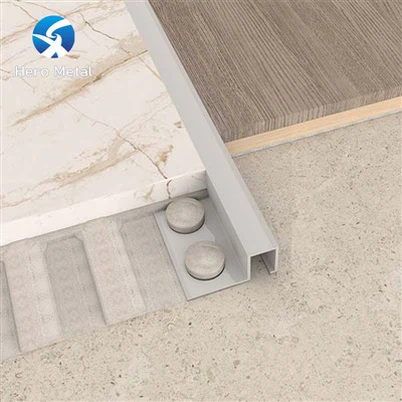
Cersaie 2026 Tile Trends: What They Mean for Tile Trim and Architectural Profiles
Leave a message

Cersaie 2026 Tile Trends: What They Mean for Tile Trim and Architectural Profiles
Tile design is about more than color and surface. As material palettes, textures and formats evolve, the finishing details around each tile become part of the overall architectural specification.
Held in Bologna, Italy, from September 21–25, 2026, Cersaie brought together the international ceramic tile and bathroom furnishings industry. Coverage of the 2026 edition points to several directions worth watching, including warm natural colors, tactile surfaces, large-format tiles and coordinated metallic finishes.
For tile importers, building material wholesalers, distributors and project procurement teams, these directions create an opportunity to review not only which tiles to source, but also which finishing products to offer alongside them. Aluminum tile edge trim, metal divider strips, transition profiles, shadow gap profiles and skirting systems can help complete installations across different project types.
01 / TREND ANALYSIS
Match the finish to the material palette
Beige limestone, travertine, sand, taupe and warm brown tones create a natural foundation for residential and commercial interiors. Depending on the tile undertone, brushed champagne gold, bronze, matte black or satin silver may complement the scheme.
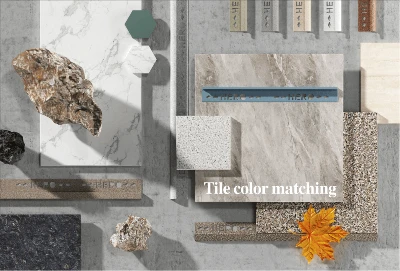
For wholesalers, a balanced finish assortment can support more tile collections without requiring a separate trim system for every design. Buyers should review physical samples, batch consistency, dimensions and packaging before confirming a bulk order.
Textured Wall Tiles Make Edge and Corner Finishing More Important
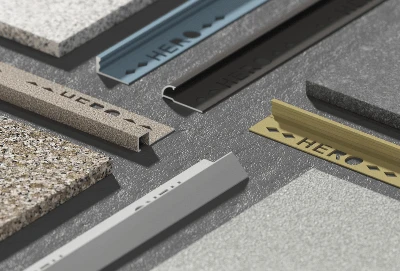
Define the edge of tactile surfaces
Fluted, ribbed, grooved and three-dimensional wall tiles introduce depth through surface geometry. Aluminum edge trims can finish exposed edges, corner profiles can define external corners, and divider strips can separate different materials or textures.
The right profile depends on tile thickness, edge geometry, installation detail and the intended visual result. For unusual dimensions or custom finishes, provide drawings and samples so the specification can be confirmed before production.
Large-format porcelain tiles and slabs create more continuous surfaces with fewer visible joints. They also make exposed edges, cut ends and transitions more prominent. When selecting an aluminum tile edge trim, confirm the actual tile thickness, profile height, edge shape and installation build-up.
A decorative wall edge and a floor edge in a busy commercial setting may have different requirements. The material, profile geometry and installation method should match the application. For project-specific assemblies, the installer or designer should confirm the full specification.

Indoor-Outdoor Continuity Creates Demand for Transition Profiles
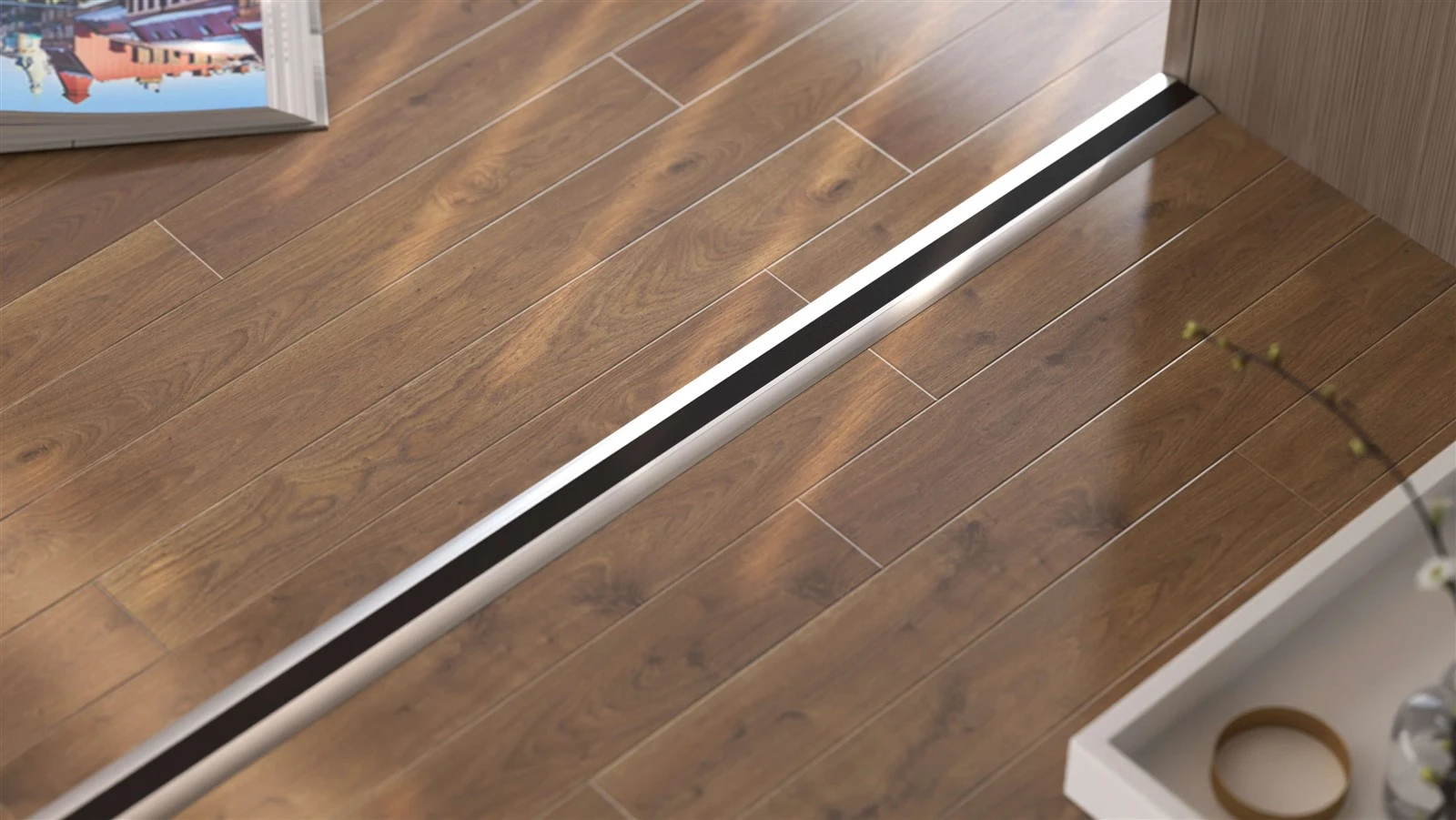
Terraces, balconies and interior living spaces may use coordinated tile colors to create visual continuity. However, outdoor exposure, drainage, substrate design and movement requirements can differ from indoor conditions.
Floor transition strips may help finish junctions between tile and other flooring materials, where the selected profile suits the height difference. Where movement accommodation is required, specify a purpose-designed movement joint system; a standard decorative divider strip is not a substitute for an engineered movement joint.
Shadow gaps, flush skirting and clean junctions
Shadow gap profiles create recessed lines at selected wall, ceiling or floor junctions. Flush skirting systems align the skirting with the wall plane, while divider profiles define transitions between materials.
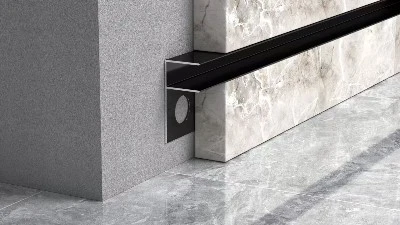
These products serve different construction purposes and are not interchangeable. Buyers should specify the intended junction, wall construction, floor finish and installation method before selecting a system.
Coordinated Finishes Turn Individual Products into a More Complete Range

Tiles, sanitaryware, hardware, metal accents and architectural details are increasingly selected as parts of a single material scheme. For profile distributors, this creates an opportunity to coordinate finishes across related product categories where product specifications allow.
Start with versatile finishes such as satin silver and matte black, then add warm metallic options according to local demand. For OEM and private-label programs, confirm drawings, dimensions, material, surface treatment, color references, packaging and order quantities before production.
What These Trends Mean for Tile Trim Wholesalers
| DESIGN DIRECTION | Related Profiles | B2B Opportunity |
|---|---|---|
| Warm stone and earthy colors | Aluminum tile edge trim, decorative metal profiles | Expand finish options and coordinate colors |
| Textured wall tiles | Tile edge profiles, suitable transition profiles | Support feature walls and mixed-surface designs |
| Large-format tiles | Edge trim, corner trim, divider strips | Offer clear specifications for different tile thicknesses |
| Indoor-outdoor continuity | Floor transition strips, movement joint systems | Build a more complete flooring accessory range |
| Minimalist detailing | Shadow gap profiles, flush skirting | Serve contemporary interior and fit-out projects |
These are potential commercial implications, not a guarantee that every category will grow equally in every market. Before expanding inventory, compare the opportunities with local sales data, customer inquiries, project specifications and installation practices.
How to Select an Aluminum Tile Trim Manufacturer
For importers, distributors and private-label brands, manufacturing capability matters as much as catalog breadth. Review product range and customization options, material and dimensional specifications, sample approval, quality-control processes, minimum order quantities, production lead times, packaging and shipping arrangements.
For OEM programs, discuss labeling, packaging, product identification and market-specific documentation before placing the order. A clear specification agreed before production helps reduce avoidable changes and makes supplier comparisons more meaningful.
Looking for a Reliable Tile Trim Manufacturer?
Discuss your profile drawings, finish requirements and bulk supply needs with HERO METAL.