Tile Trim Surface Treatment - Difference Between Powder Coating & Lamination
Leave a message
What is the Difference Between Aluminum Coating & Lamination?

Powder Coating and Lamination are two commonly used surface treatment methods in Aluminum Tile Trim. Both involve molten plastic extrusion, but they differ in principle, structure, and performance. Understanding these differences helps you solve real-world problems efficiently.

1. Different Process Principles
- Extrusion Coating: Molten plastic is applied directly to a single substrate (such as aluminum foil, aluminum sheet, paper, or film) to form a single protective layer. This is primarily used for surface protection, moisture resistance, oil resistance, and scratch resistance.
- Extrusion Lamination: Molten plastic is used as an adhesive layer to securely bond two or more materials together to form a multi-layer composite structure. This is used to enhance strength, improve barrier properties, and achieve multifunctional combinations.
2. How to Choose the Right Process?
▲ Powder Coating
Process Principle
Plastic materials such as LDPE, PP, or EVA are heated and melted in an extruder. The molten plastic is extruded through a die and directly applied onto the surface of aluminum or stainless steel. After cooling, it forms a single-layer protective coating.
Features
- Single-layer protection, simple structure
- Fast processing, high production efficiency, low cost
- Provides moisture, oil, and scratch resistance, and enhances printability
Product Applications
- Aluminum stair nosing with coating to prevent wear and slip
- Stainless steel corner trims with protective coating for corrosion resistance and aesthetic finish
- LED profiles with coated surface for easier painting and installation
Customer Problem Solved
If your product mainly faces scratches, moisture, or appearance concerns, extrusion coating offers a quick, cost-effective solution.
▲ Lamination
Process Principle
Unlike coating, extrusion lamination uses molten plastic as an adhesive layer to bond two or more materials, such as aluminum sheet + plastic film, or aluminum + fabric layer, into a strong composite structure.
Features
- Multi-layer structure with combined functionality
- Improves mechanical strength, abrasion resistance, and barrier performance
- Enhances durability and appearance for long-term use
Product Applications
- Aluminum stair nosing + rubber insert for anti-slip and wear resistance
- Stainless steel corner trim + PVC film for corrosion resistance and decorative effect
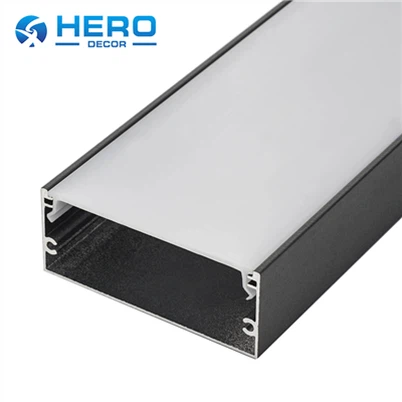
- LED profile + diffusing cover for uniform light distribution and impact resistance
Customer Problem Solved
When your project requires high strength, multi-functionality, and long-term durability, extrusion lamination ensures trims and profiles maintain performance and aesthetics over time.
3. Choosing the Right Surface Treatment for Aluminum Tile Trim
Both powder coating and lamination provide value, but the right choice depends on your project requirements:
- If your priority is surface protection, such as waterproofing, scratch resistance, or printability, extrusion coating is sufficient. It is economical, fast, and ideal for products that do not need structural reinforcement.
- If your project demands strength, multi-functionality, or enhanced durability, aluminum tile trim lamination is the better choice. By bonding multiple layers together, it produces composite materials that can resist wear, moisture, and mechanical stress while maintaining a professional appearance.
In other words, coating is like a protective shield, while lamination acts as reinforced armor for your product. Understanding your needs ensures you select the process that balances cost, performance, and longevity.
Understanding extrusion coating vs. lamination helps you align the process with your needs - whether it's single-layer protection or multi-layer composites. And when it comes to trims and profiles, HeroDecor brings the same problem-solving approach: turning raw materials into value-added solutions that make every project stronger, safer, and more stylish.
4. What's Benifits of Hero Metal? (Leading China Tile Trim Manufacaturer)

Own 3 production bases in China, Vietnem, Saudi Abrica, over 200,000㎡ factory areas.
In the aluminum tile trim manufacturing, Hero Metal provides customized coating and lamination solutions:
- Multi-process support: Choose coating or lamination based on your performance requirements
- Material optimization: Tailored thickness and surface treatment according to installation environment and usage
- Quality assurance: Precision tile trim manufacturing equipments and surface finishing ensure durability, aesthetics, and easy installation
Understanding the difference between powder coating and lamination allows you to select the most suitable types for aluminum tile trims, and help to choose the best tile trim manufacturer, furthermore. controlling costs while ensuring tie trim quality and long-lasting performance.