Stop Stair Failures: Tiling Edges with Metal Nosing (Safety First)
Leave a message
Tiling a staircase is one of the most challenging and high-stakes parts of any flooring project. When you ask "how to tile stairs edge," you're not just asking about aesthetics; you're asking about safety, durability, and compliance. As a professional who has worked on countless stair installations, I can tell you that the edge is where the entire project succeeds or fails.

Why the Edge is Everything: Safety First
Unlike a flat floor, a stair edge is a high-impact, high-risk area. It's the point where foot traffic is concentrated, and it's the primary location for slips and falls. This is why professional standards (like OSHA and local building codes) place strict requirements on stair nosing. Your primary goal is to create a durable, highly visible, and slip-resistant edge.
The Three Professional Options for Tiled Stair Edges
When finishing a tiled stair edge, you have three main choices. I always steer clients toward the metal profile for its superior safety and longevity.
| Option | Pros | Cons | Best For |
|---|---|---|---|
| 1. Bullnose Tile | Seamless look, matches the tile material. | High cost, limited slip resistance, prone to chipping. | Low-traffic residential areas. |
| 2. Metal Stair Nosing Profile | Maximum durability, integrated slip resistance (rubber inlay), protects tile edge, high visibility. | Higher material cost than bullnose, requires precise setting. | Commercial, high-traffic, and public spaces. |
| 3. Pencil Trim/Caulk | Lowest cost, simple aesthetic. | Zero edge protection, poor safety, not suitable for stairs. | Only for vertical wall edges, never stairs. |
The Professional's Choice: Metal Stair Nosing Installation
For any serious project, the metal stair nosing profile is the gold standard. Here is the professional installation sequence:

- **Preparation:** Ensure the stair tread is perfectly level and clean. The nosing profile must be set first, before the main tread tile.
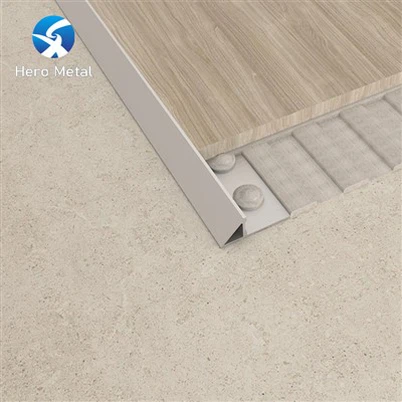
- **Setting the Nosing:** Apply thin-set mortar to the edge of the stair tread. Press the metal nosing profile firmly into the mortar, ensuring the vertical flange is fully embedded. The top surface of the nosing should be flush with the intended surface of the finished tile.
- **Tiling:** Lay the riser tile first, then the tread tile. The tread tile should butt up tightly against the nosing profile's edge. This ensures the nosing takes the brunt of the impact, protecting the tile's vulnerable edge.
- **Safety Feature:** If your profile includes a rubber or PVC anti-slip inlay, ensure it is installed correctly after the mortar has cured. This is a non-negotiable safety feature for commercial stairs.
Beyond Installation: The Durability and Compliance Factor
As a professional, I look beyond the installation day. The stair edge must withstand years of heavy use. This is where the material choice-specifically **high-grade aluminium stair nosing**-makes all the difference. It provides superior edge protection against chipping and cracking, which is a common failure point for ceramic or porcelain tiles on stairs.
Furthermore, in public and commercial buildings, compliance with safety regulations is not optional. A quality metal nosing profile often comes with features like contrasting colors and integrated slip-resistant surfaces, which help meet visibility and friction requirements set by bodies like the **International Code Council (ICC)** and **OSHA**. Always check your local codes, but choosing a profile designed for commercial safety is the best way to future-proof your project.
Need Commercial-Grade Stair Nosing for Your Next Project?
Secure your supply of high-durability, safety-compliant metal stair nosing profiles directly from the factory.
Request Factory Quote Now*HERO METAL is a leading manufacturer specializing in high-quality metal decorative profiles, providing factory-direct solutions to global wholesalers and contractors.*